PDF
40 pp.
Studies, policy papers, and training manuals emerging from our field programs and projects across governorates.

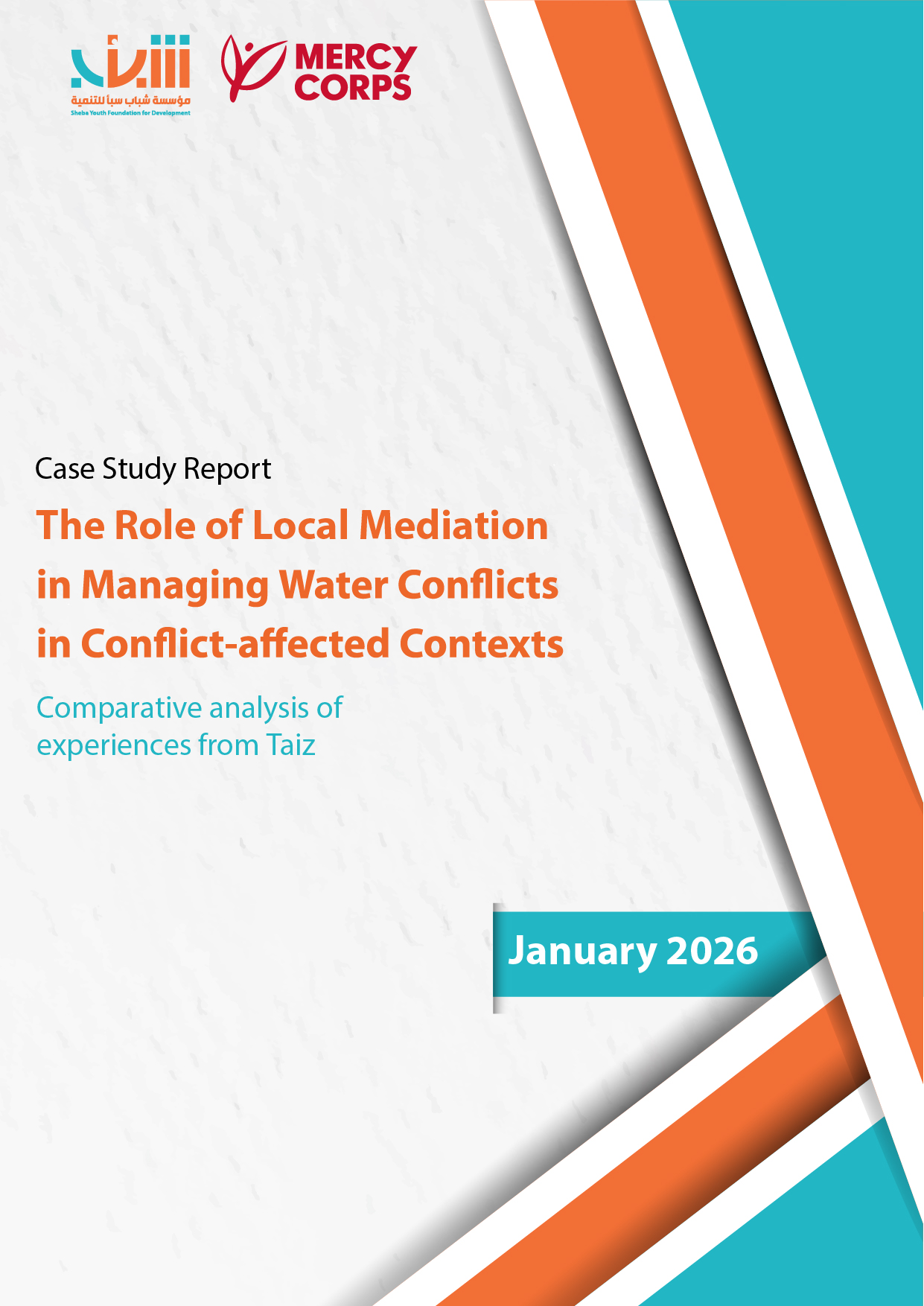
This study aims to document and analyze local experiences with community mediation regarding water disputes in three districts of Taiz Governorate—Jabal Habashi, Al-Ma'afir, and Al-Shamayatayn—by adopting a comparative analytical case study approach. This approach goes beyond merely describing events; it seeks to deconstruct the context, understand conflict patterns, and derive intervention models that are adaptable and replicable in similar settings.
This paper examines the experience of local mediation in managing water-related conflicts across three districts in Taiz Governorate: Jabal Habashi, Al-Ma'afir, and Al-Shamayatayn. It draws on a field case study documenting how community-based mediation mechanisms—when designed with sensitivity to the local context and supported by follow-up mechanisms—contributed to containing conflicts, curbing their escalation, and preserving social cohesion in an environment characterized by resource scarcity and a limited official institutional presence.
The guide is designed primarily for practitioners and community actors—rather than as a theoretical or academic reference—focusing on learning by doing, role-testing, and direct interaction among participants through simulation.
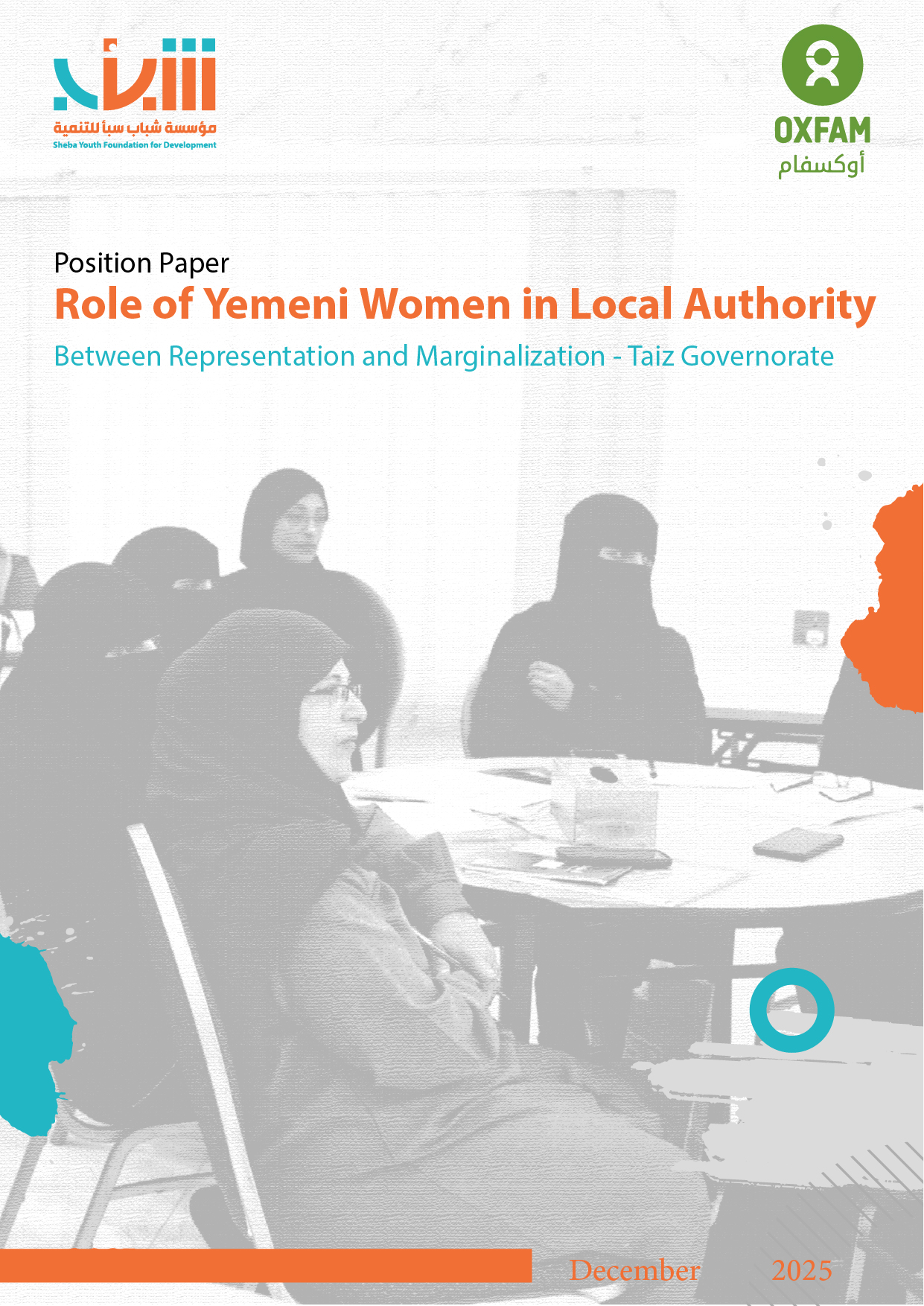
The development of this position paper on "The Role of Yemeni Women in Local Government: Reality vs. Marginalization" is part of Sheba Youth Foundation for Development’s program to articulate its stance on the gap between women's formal representation in local government and their actual impact on governance.