Sheba

Water: Mediation & Governance

From a stalled service to a path of trust and a roadmap in Taiz Governorate

Sheba Youth Foundation for Development developed a local path in water mediation and governance in Taiz, contributing to understanding the crisis dimensions, opening channels of trust, and building spaces for cooperation over basic public services.

Service Reality in Taiz

Water in Taiz: One Service, Divided Reality

Before the war, the water system in Taiz City operated as a relatively integrated service, linking water sources, wells, reservoirs, and distribution networks. However, the conflict did not only affect the infrastructure; it also disrupted service management, technical team movements, facility access, and trust among actors.

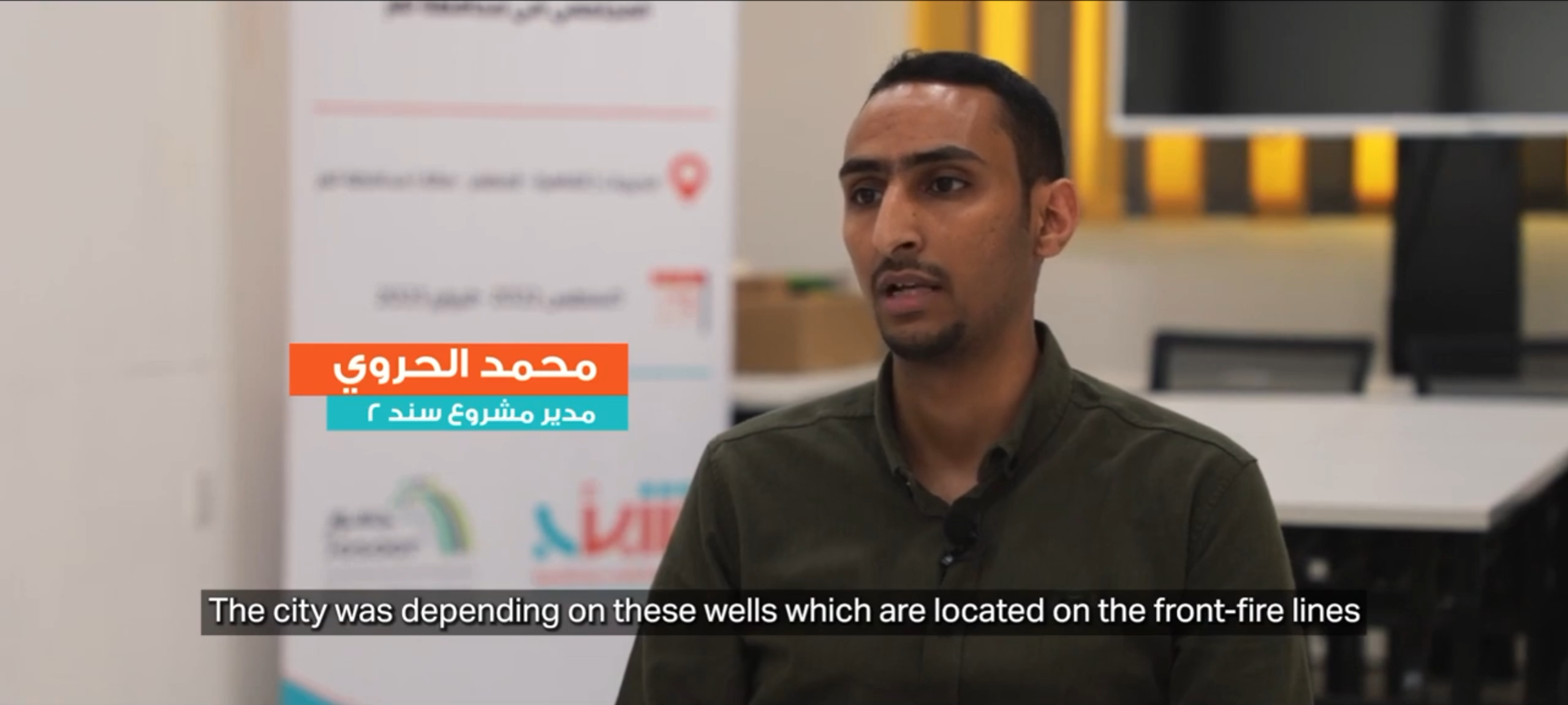
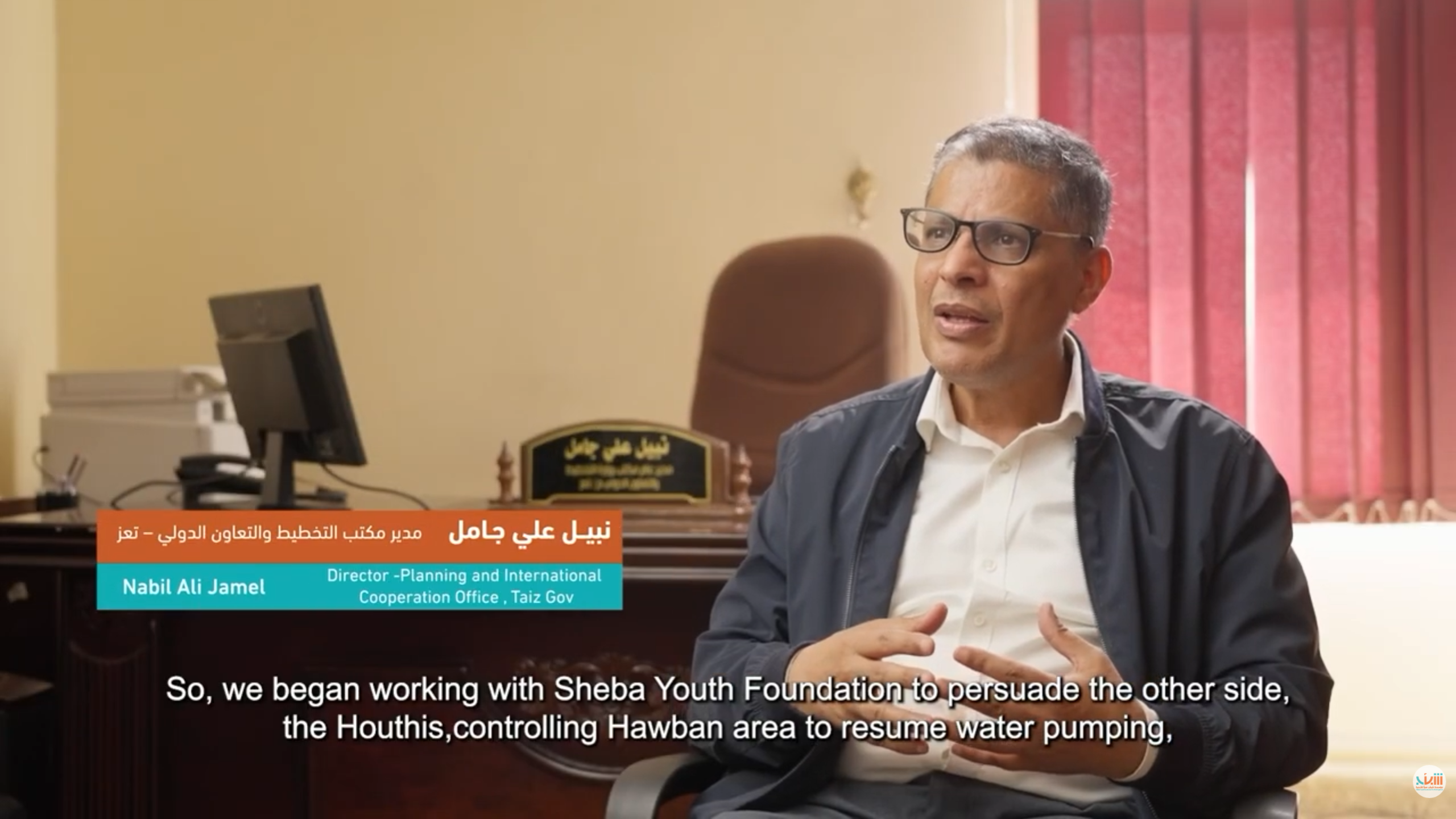
Over time, various components of the water system fell under different areas of influence, frontlines, or administrative and security arrangements. Accessing certain wells, fields, pipelines, and facilities became difficult, and some assets required communication channels and safety guarantees for technical teams to evaluate, operate, or maintain them.

Consequently, water in Taiz appeared as a single service in terms of public need, but functioned within a deeply divided and complex reality. Reservoirs cannot be separated from wells, the service from the public corporation, technical access from trust, nor the residents' need from the actors' coordination capacity.

Geographical Division

Water System between Huwban & City

Taiz City (Consumption & Demand)Main ReservoirsFrontlineAl-Huwban (Wells & Sources)Production Wells
Key Message

The water crisis in Taiz Governorate is not merely a technical one; it is a public service crisis deeply tied to trust, access, assets, and governance.


Linking Services & Peace

Water: A Matter of Peace & Governance

In conflict settings, basic services transform into more than just utilities or networks. They expose the community's relationship with public institutions, the fairness of resource allocation, and local actors' capacity to cooperate around shared needs.

In Taiz Governorate, the challenge was not merely: "How do we fix a pump or restart a pipeline?" It was also: How do we protect public assets? How can technical teams arrive safely? How do we neutralize water as a shared humanitarian necessity? And how do we restore the public corporation's role in service management within a divided reality?

Hence, mediation around water became an intrinsic part of addressing the service itself. Without a baseline of trust and coordination, transforming technical rehabilitation into a sustainable service is impossible. And without clear governance, any operational progress remains temporary or vulnerable to collapse.
Transformation Pipeline

Public Service Neutralization & Governance Pipeline

An interconnected pipeline transforming public utility from conflict friction to durable governance

01

Water

Shared Humanitarian Need

02

Trust

Opening Channels & Communication

03

Safe Access

Technical Team Mobility

04

Neutralizing Service

Insulating Assets from Conflict

05

Service Management

Restoring Governance & Institutions


How We Work at Sheba

Our Methodology in this Path

An iterative, conflict-sensitive methodology to build sustainable solutions: from diagnosing problems and building trust to mediation, supporting governance, documentation, and impact.

Step 01

Analysis

Understanding service disruptions and analyzing local conflict dynamics.

Step 02

Mediation

Opening spaces for dialogue and community mediation to bridge gaps and build consensus.

Step 03

Trust Building

Restoring confidence and mutual cooperation between local communities and authorities.

Step 04

Governance

Supporting institutions to implement joint solutions and improve service delivery.

Step 05

Documentation

Documenting case studies and establishing a sustainable operational roadmap.

Step 06

Impact

Achieving sustainable local transformation and public asset protection.


Accumulated Phases of the Track

Water Mediation Pathway in Taiz 2020–2025

A cumulative 7-stage pathway showcasing the evolution of Sheba Youth Foundation's water mediation in Taiz, from initial conflict diagnosis to a strategic institutional roadmap.


Water Sector Roadmap 2025-2028

The Roadmap: What Comes After Mediation?

A comprehensive strategic framework (2025–2028) linking mediation, institutional governance, and technical rehabilitation to ensure a sustainable pathway for Taiz's water sector.

Pillar 01

Institutional, Administrative & Financial Governance

Focuses on strengthening the Water Corporation from within.

Pillar 02

Political, Security & Mediation Aspects

Focuses on neutralizing the water file from active conflict.

Pillar 03

Technical Rehabilitation

Focuses on technical requirements for wells.

Complete Roadmap Document

Download the Full Strategic Water Sector Roadmap (2025–2028)

Includes full analysis of challenges, corporate recommendations, and executive programs linking mediation to public service.

Publications & Knowledge Products

Curated policy papers, guides, field studies, and analytical research reports produced within this track.

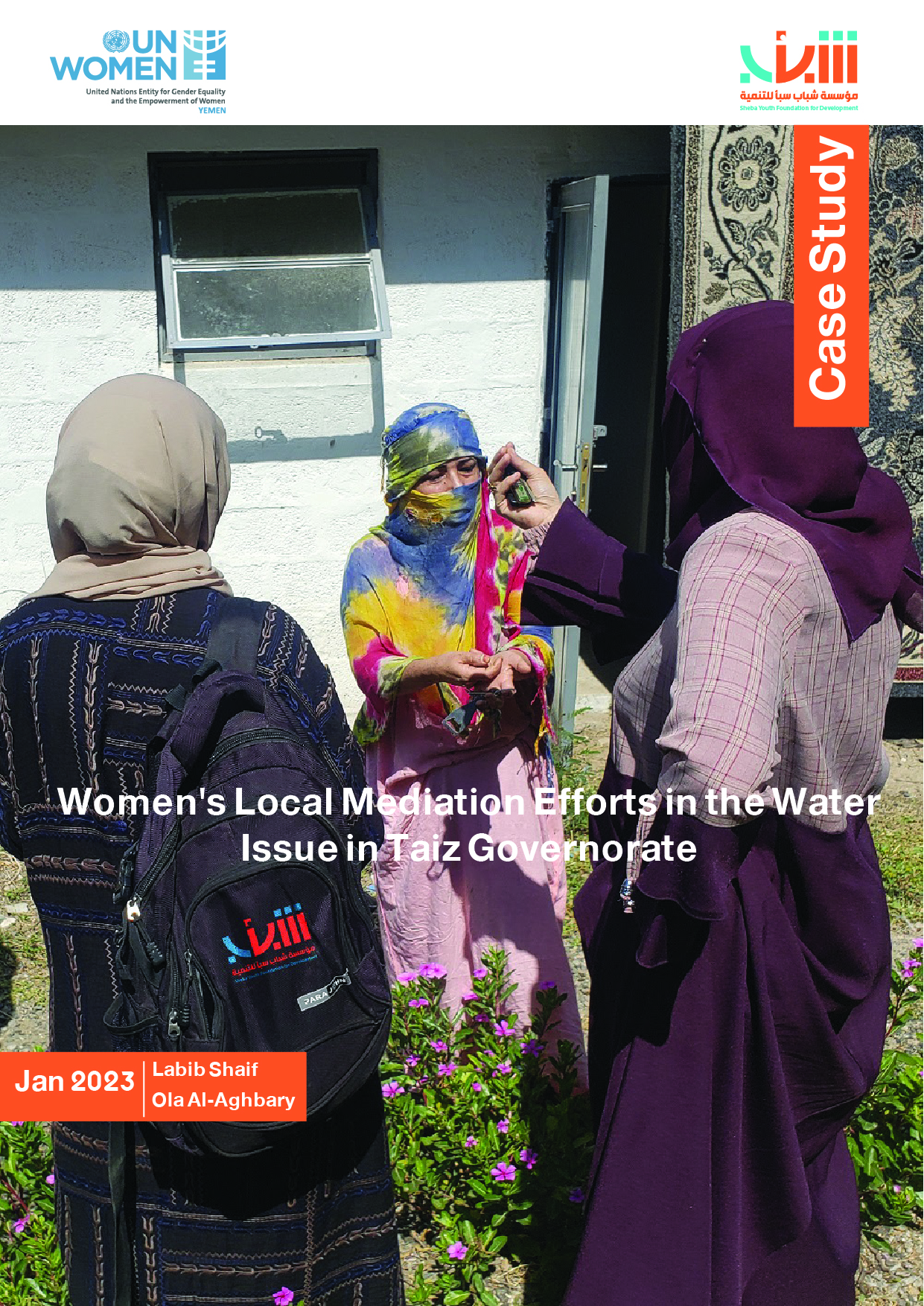
Women’s Local Mediation Efforts in the Water Issue in Taiz Governorate
PDF
20 pp.
Case StudyWater: Mediation & Governance

Women’s Local Mediation Efforts in the Water Issue in Taiz Governorate

This case study documents local mediation around the water issue in Taiz, highlighting women’s roles, trust-building, neutrality, and conflict-sensitive practice in a critical public service issue.


The water crisis in Taiz Governorate is not merely a technical one; it is a public service crisis deeply tied to trust, access, assets, and governance.